Share

June 2026

Kia ora koutou

The next New Zealand General Election is scheduled for 7 November 2026, unless an early election is triggered.  Political parties in New Zealand are now actively campaigning on policy and leadership, as voters consider who will form the next government.

For many migrants and expats arriving in New Zealand, the local political environment can feel quite different from what they are used to back home. As you settle into your new life, understanding how this system works is a great way to feel more connected to your new community.

In this edition, we take a closer look at New Zealand’s Mixed-Member Proportional (MMP) voting system, explain residency-based voting rights for newcomers, and share some surprising facts about how elections are run here.

You will also find new articles covering key relocation decisions such as buying versus renting for investor migrants, along with a moving story from a family’s journey from the US to New Zealand.

To add a touch of local flavour, we explore Aoraki / Mount Cook and its cultural and natural significance.


How Kiwis elect national representatives

New Zealand holds general elections every 3 years. We elect around 123 Members of Parliament (MPs) and the winning party (or coalition of parties) selects the Prime Minister and the Cabinet of Ministers.  There is only one representative body  (unlike countries like the US which has Congress and the House of Representatives) and we have a unitary rather than a federal system.  If an MP dies or resigns between general elections a by-election is held to replace them.

There is also provision for a referendum on a particular issue, which can be initiated by parliamentarians or the public.  These can be held at the same time as the general election or held separately. For example the 2020 referendum on allowing voluntary euthanasia on certain conditions was agreed by 66%. 

Understanding  New Zealand’s MMP Voting System

New Zealand uses the Mixed-Member Proportional (MMP) voting system, which was introduced in the 1990s to ensure Parliament more closely reflects how the country actually votes overall, rather than the ‘winner takes all’ approach previously in place under our ‘first past the post’ system.

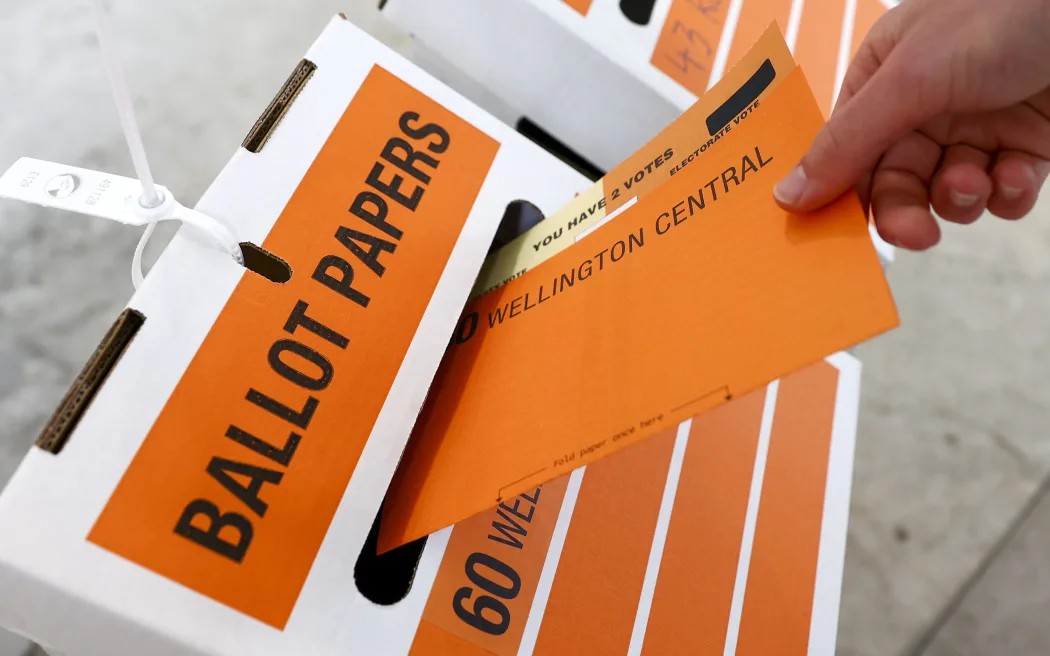
Under MMP, voters cast two separate votes:

  • The Party Vote: This is the most important vote because it largely determines the overall makeup of Parliament and which political party (or coalition of parties) will form the government

  • The Electorate Vote: This vote is for the individual candidate you want to represent your local area in Parliament

Because seats are allocated proportionally according to the party vote, smaller political parties can still gain representation. This often leads to coalition governments, where parties work together to form a majority.
Who Can Vote in New Zealand?

One of the biggest surprises for many expats and migrants is that voting rights in New Zealand are based on residency, not only citizenship.

To be eligible to enrol and vote, you must:
  • Be 18 years or older
  • Be a New Zealand citizen OR a permanent resident
  • Have lived in New Zealand continuously for at least 12 months at some point

For our investor migrants, this means you can often become eligible to vote while still in your investment period, provided you have secured your residence visa and met the time criteria.

What does "living continuously" mean?
This requirement can sometimes cause confusion. In practice, it generally means:

  • You must be physically present in the country for a 12-month period
  • You are genuinely settled here and not just visiting intermittently

Can you travel?
Yes! Short trips overseas are usually acceptable and do not "reset" your 12-month period. The key consideration is whether New Zealand remains your main base.

When you apply to enrol, Immigration New Zealand conducts background checks to verify these qualifications.  

Electoral rolls are made public: When you enrol, your name and address are listed on the electoral roll.  You can apply to go on the unpublished roll.

When and How Do You Vote for a General Election?

New Zealand’s voting system is designed to be straightforward and accessible.

Enrol to vote
From 2026, to vote in a general election, you must enrol at least 13 days before election day. Unlike previous elections, you will not be able to enrol at a voting place on election day.

You can enrol to vote or update your enrolment details online.

Where you vote
Voting usually opens in advance, allowing people to vote over a period of days before election day itself.  It must be done in person.

On election day, there are voting places available throughout New Zealand, in places like community halls, libraries and even supermarkets.

What actually happens when you vote
When you arrive at the voting centre, your name will be checked against the electoral roll.  You will then be given voting papers which comprise 2 lists - one of parties and the other of local candidate names for your area or electoral.

You then complete your ballot privately and your completed ballot is placed into a secure ballot box for counting.

4 Surprising Facts About Voting in New Zealand

To help you get to know the local "lay of the land," here are some unique facts about how we do things here,:
  • Enrolment is compulsory: If you are eligible, you are legally required to enrol on the electoral roll, though actually casting a vote remains your choice
  • No ID is required: You do not need to show a passport or driver's license at the polling station to vote as your name is marked off the electoral roll
  • Votes are primarily counted by hand: They are then verified through multiple checking processes to ensure accuracy
  • Two Electoral Rolls: New Zealand has both a general electoral roll and a Māori electoral roll. Voters of Māori descent can choose which roll they want to be on, which affects the candidates they can vote for.
New Zealand’s political history

If you want to go a little deeper, exploring the history of New Zealand’s political parties is a great starting point. 

It helps explain the conditions that led to
electoral reform, which ultimately resulted in the Electoral Act 1993 and the introduction of the MMP voting system.


From the US to Aotearoa: A Teacher's Family Relocation Journey

This month we share Sarah Jette and her family’s journey (including four cats), exploring what it really takes to settle into life in New Zealand. From the practical challenges of moving an entire family across the world to the everyday surprises of a new classroom, a new community, and a new way of life.


Read the full article here


Buying vs. Renting in New Zealand: A Strategic Guide for AIP Investor Migrants

Creating a home is a key concern for all our AIP investor migrant clients and their families relocating to New Zealand. We do, however, caution against jumping into buying a property prematurely - our latest article explains why a strategic approach can create better long-term outcomes.


Read the full article here
Kiwi place names - Aoraki / Mount Cook

Most newly arrived expats and migrants will soon hear about New Zealand's highest peak, the spectacular mountain in the Southern Alps known as: Aoraki / Mount Cook.  Ao means clouds, raki means "sky".

Together, Aoraki is often poetically translated as "Cloud Piercer".

According to local Ngāi Tahu mythology, Aoraki was a young boy travelling in a waka (canoe) from the heavens with his brothers. When their waka stranded on a reef and overturned, they climbed onto the high side and were turned to stone by the freezing south wind. Their canoe became the South Island, while Aoraki and his brothers became the peaks of the Southern Alps.


For more frequent updates on global relocation and life in New Zealand:

 
If you think any part of this newsletter would be helpful to someone else in your circle, please feel free to pass it along.
Facebook
 
Linkedin
 
Instagram
 
Website
 
Email

Email Marketing by ActiveCampaign